


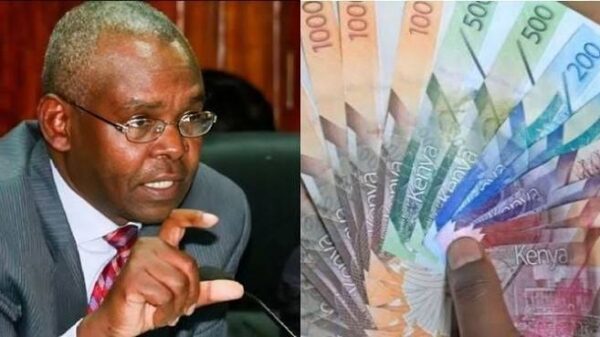














































The government is set to overhaul how it finances university education, with plans to remove university funding from the national budget altogether starting October.
Chairperson of the President’s Council of Economic Advisors, David Ndii, announced the shift at an economic forum, saying the state would move to a market-based financing model instead of relying on annual budget allocations.
“We are going to take university funding out completely from October we are taking that out completely of the budget into a sort of market funding model where the government just capitalises the fund over a long period but the fund actually raises money from the market,” Ndii said.
Under the plan, the government would capitalise a dedicated fund over an extended period, after which the fund would source additional financing from investors and the financial markets rather than depending solely on yearly Treasury allocations.
The announcement comes weeks after President William Ruto unveiled plans for full government funding of all students admitted to universities from September 2026, with tuition and upkeep covered during study and repayment expected once graduates secure employment.
The proposed system would replace the current Variable Scholarship and Loan Funding model, which blends government scholarships, student loans and household contributions based on means testing.
Both changes are anchored in the Tertiary Education, Placement and Funding Bill, 2026, now before Parliament. The bill also proposes merging the Higher Education Loans Board (HELB), the Universities Fund and the TVET Fund into a single body, the Tertiary Education Funding Authority (TEFA), which would centrally finance students in public universities, colleges and TVET institutions.
The government argues the new authority will create a more unified and sustainable funding system, replacing the current arrangement where separate agencies handle different aspects of higher education financing.
President Ruto has been sharply critical of the existing 2023 model, which he says undermined universities financially.
“We tried the differentiated model. I think the Vice-Chancellors here know it didn’t work because it made most of our universities almost close down. After all, while we promised 80 per cent funding, we went down to 40 per cent,” Ruto said.
The reforms come as pressure mounts on the financing system. Universities Fund Acting CEO Edwin Wanyonyi has said the number of Kenyans qualifying for university admission has grown by more than 300 per cent in under a decade, with beneficiaries rising from 118,153 in the 2023/2024 financial year to 408,879 in 2025/2026, and a projected 608,879 in 2026/2027.
Education CS Julius Ogamba has also defended the reforms, arguing that means testing under the outgoing model had forced some students to abandon courses their parents could not afford, adding that the new approach would fund “the future of the student” instead.
The Tertiary Education, Placement and Funding Bill is awaiting parliamentary debate as the government pushes for its passage ahead of the planned September 2026 rollout.