





















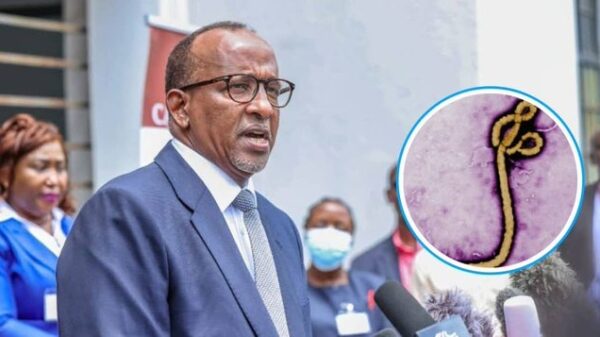
















The Ministry of Health has confirmed a second case of Ebola in Kenya.
In a statement on Wednesday October 14, the ministry said the patient is a 39-year-old man who is a close family member of the first confirmed case.
According to the ministry, the man was already in quarantine and under daily monitoring when he developed symptoms on Tuesday, October 13.
“The Ministry of Health confirms a second case of Ebola (Bundibugyo Virus Disease) in Kenya. The patient, a 39-year-old man, is a close family member of the first case and was already in quarantine, under daily monitoring, when he fell ill on 13th October 2026,” read the statement in part.
The patient presented with fever, fatigue and joint pains, prompting the quarantine team to isolate him and collect a sample for testing.
The sample tested positive at both the National Virology Reference Laboratory and the KEMRI-CDC laboratory, with both facilities returning matching results.
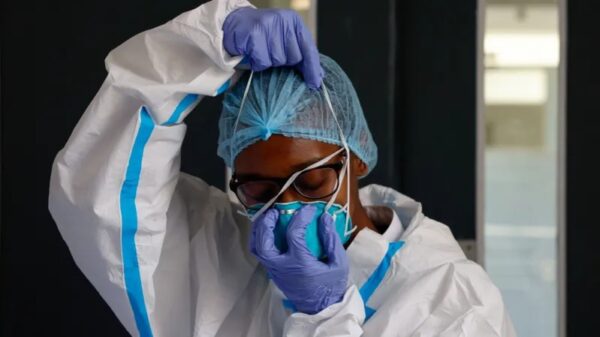
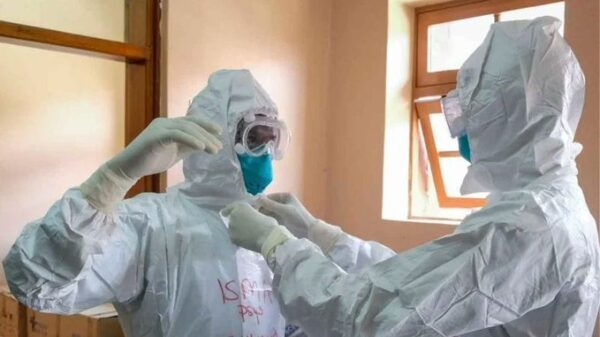
The patient has since been transferred to a designated treatment centre, where he is receiving supportive care from trained medical teams.
“He is now in a designated treatment centre, where trained teams are giving him supportive care. Because he was already in quarantine, his illness was detected early.” the statement added.
The ministry said early detection was made possible because the patient was already in quarantine, adding that isolating him at the onset of symptoms reduces the risk of transmission to others.
Kenya has now recorded two confirmed cases of Ebola, including one death.
Meanwhile the health authorities have identified 128 contacts linked to the first case and traced 113 of them.
Of those traced, 108 are in quarantine in Kenya, where they are undergoing daily clinical assessments and temperature checks for 21 days from their last possible exposure.
The remaining five contacts are outside the country, and health authorities in the respective countries have been notified in accordance with the International Health Regulations.
The ministry said efforts to trace the remaining 15 contacts were ongoing, while teams were also assessing people who had interacted with the second patient since he developed symptoms, including quarantine staff and healthcare workers.