








































By Alphonce Owino | Nairobi, Kenya
Kenya must put science, public consent and long-term safety ahead of political deadlines in deciding the future of nuclear energy.
Kenya’s proposed nuclear power plant in Siaya County presents one of the most consequential energy decisions facing the country. The project promises reliable electricity, industrial growth, employment and new infrastructure for a region whose economic potential has long been constrained by poverty and limited investment. Yet it also raises fundamental questions about environmental protection, public participation, financial sustainability and the safety of millions of people who depend on Lake Victoria.
The proposed site at Lenya village has emerged as a preferred location in Kenya’s nuclear programme, with the project’s estimated cost reported at approximately Sh500 billion. The government sees nuclear power as a possible source of dependable, low-carbon electricity to support industrialisation and reduce reliance on weather-dependent generation. But the crucial question is not whether nuclear power can work. It can. The question is whether Kenya can demonstrate, through independent evidence, that this particular project is safe, affordable and necessary.
For Siaya, the potential benefits are substantial. Construction could create jobs, stimulate local businesses, improve roads and attract investment in healthcare, education, housing and technical training. Once operational, the plant could support manufacturing and other electricity-intensive industries. A properly negotiated community benefits programme could help transform the local economy.
However, these gains are not automatic. Nuclear plants require specialised workers, sophisticated security systems, extensive transmission infrastructure and decades of maintenance. Many construction jobs may be temporary, while permanent technical positions could go to qualified workers recruited from elsewhere. Land acquisition and resettlement could also disrupt farming, fishing, ancestral ties and established community structures. Siaya residents therefore need enforceable commitments on employment, compensation, local procurement, electricity access and long-term development—not simply promises made at public meetings.
The stakes extend far beyond the county. Lake Victoria sustains fisheries, transport, agriculture, tourism and household livelihoods across Kenya, Uganda and Tanzania. A nuclear facility near the lake must be assessed for its effects on water resources, aquatic ecosystems and neighbouring communities. Even without a radiation accident, large volumes of cooling water, heated discharge, construction activity and changes in land use require careful environmental assessment. Any contamination incident, however unlikely, could have consequences extending across national borders. Radioactive waste management and the security of spent fuel must also be addressed before construction, not postponed until the plant is operating.
Nuclear energy offers an important advantage: it can generate large amounts of electricity continuously with very low operational carbon emissions. Yet its financial risks are equally real. International experience shows that nuclear projects can suffer lengthy delays, escalating costs and expensive financing. France’s Flamanville EPR and Finland’s Olkiluoto 3 both experienced major delays and cost overruns. Such examples matter to Kenya, where a project of this scale could place considerable pressure on public finances, electricity tariffs and competing priorities such as hospitals, schools, transmission lines and renewable energy.
The international record also demands humility. The 1986 Chernobyl disaster in Ukraine and the 2011 Fukushima Daiichi accident in Japan demonstrated how technical failures, inadequate safety arrangements, natural hazards and institutional weaknesses can produce consequences lasting generations. These events do not mean every nuclear plant is unsafe; they demonstrate why robust regulation, emergency preparedness, independent oversight and a strong safety culture are indispensable.
The scientific and political fault line
The most serious concern is whether political ambition is moving faster than the scientific process. Nuclear projects should be guided by evidence, independent regulation and transparent decision-making—not electoral timetables, political alliances or the desire to announce an early groundbreaking.
The International Atomic Energy Agency (IAEA) recommends a phased process covering 19 essential infrastructure issues, including nuclear safety, financing, regulation, site suitability, stakeholder involvement, emergency planning and radioactive waste management. Its framework anticipates that establishing the necessary infrastructure for a first nuclear plant typically takes at least 10–15 years.
Kenya must therefore distinguish between identifying a preferred site and proving that the site is suitable for a nuclear power station. The two are not the same. Detailed geological investigations, seismic and volcanic hazard assessments, hydrological studies, flood modelling, climate projections, population analysis and environmental assessments must inform the final decision.
This distinction is especially important because a September 2026 report by Mongabay raised a serious question about Kenya’s own Strategic Environmental Assessment: it reported that a 2023 assessment recommended avoiding the Lake Victoria region because of volcanic hazards. That claim requires the full assessment, its technical evidence and the government’s response to be placed before the public. If the assessment did identify an exclusionary safety concern, authorities must demonstrate transparently, through independent technical review, how it has been resolved—or abandon the site if it cannot be resolved.
There are also questions about the quality of public participation. In September 2026, residents raised concerns about access to information, while a petition filed in the Environment and Land Court in Kisumu challenged proposed project activities before the relevant legal safeguards had been established. These are reported disputes, not proof that every allegation is correct. Nevertheless, they demonstrate why transparency and due process cannot be treated as obstacles to development.
Public participation must mean more than holding meetings after the preferred location has effectively been decided. Residents need access to understandable environmental reports, independent scientific advice, land acquisition plans, financing assumptions and documented answers to their objections. Fishing communities, women, young people, traditional leaders and residents who may be displaced must have meaningful opportunities to influence the decision.
Lessons from the world’s nuclear experience
Fukushima Daiichi, Japan — 2011
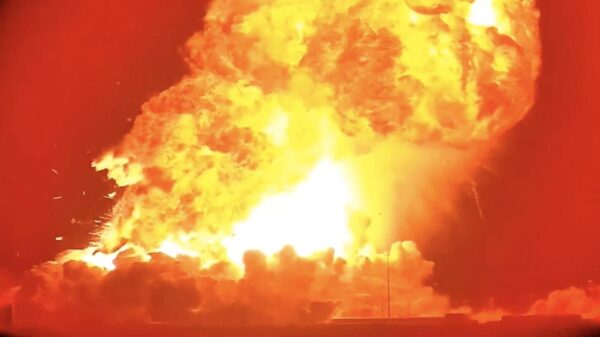
A major earthquake and tsunami disabled essential power and cooling systems, causing reactor meltdowns. The lesson for Kenya is that safety assessments must consider extreme and combined hazards, backup systems, prolonged power loss and emergency responses extending beyond the plant boundary. No technology can honestly be described as incapable of leaking or suffering an accident.
Chernobyl, Ukraine — 1986
The disaster exposed the devastating combination of reactor design weaknesses, unsafe operating practices and failures in safety culture. Kenya must establish an independent regulator with the authority and resources to stop unsafe work, reject inadequate designs and disclose safety concerns without political interference.
Flamanville 3, France — construction delays
The EPR project experienced years of delay and substantial cost escalation. Finland’s Olkiluoto 3 also faced prolonged delays. These cases show that complex engineering, supply-chain problems, quality-control failures and unrealistic schedules can turn ambitious energy projects into expensive national liabilities. Kenya should publish independently audited costs and realistic construction milestones before committing public funds.
What Kenya must do before proceeding
First, the government should publish the complete site-selection criteria, the 2023 Strategic Environmental Assessment and all relevant findings on geological, volcanic, water and ecological risks. An independent technical panel should review any contested findings and publish its conclusions.
Second, Kenya needs a demonstrably independent nuclear regulator, a credible licensing framework, trained inspectors and enforceable safety standards before major construction commitments are made.
Third, a full financial assessment must compare nuclear power with realistic alternatives, including geothermal, wind, solar, storage, transmission upgrades and improved grid management. The comparison must account for financing costs, construction delays, decommissioning, waste disposal and the electricity tariffs consumers may ultimately pay.
Fourth, Kenya and the wider Lake Victoria community need a credible emergency plan covering evacuation where necessary, public alerts, hospitals, radiation monitoring, cross-border cooperation and compensation for affected households and businesses. A binding waste-management strategy and long-term funding arrangements are equally essential.
Finally, Siaya residents deserve a legally enforceable agreement specifying compensation, local employment, skills training, infrastructure investment and environmental monitoring. Any promised community benefits must be additional to the safeguards that government is already legally obliged to provide.
The verdict: development must not outrun evidence
Siaya deserves investment, jobs and reliable electricity. The Lake Victoria region deserves protection of its water, fisheries, ecosystems and livelihoods. Kenya deserves an energy strategy based on evidence rather than political spectacle.
Nuclear power should neither be rejected simply because accidents have occurred elsewhere nor embraced on the assumption that modern technology eliminates risk. The proper test is whether the country can demonstrate that the proposed site is suitable, the project is affordable, the regulator is independent and the affected population has been adequately informed and heard.
If those conditions cannot yet be demonstrated, postponing construction is not a failure of leadership. It is responsible governance. A groundbreaking ceremony lasts a day; a nuclear facility can shape a community’s future for a century or more.
The government must prove the project is safe before asking the people of Siaya and the wider Lake Victoria region to trust it. In nuclear energy, scientific evidence must set the timetable—not politics.