
































By Alphonce Owino
Governance Expert / Educationist
Nairobi, Kenya
An open appeal to African Heads of State, Presidents, Heads of Government and all people committed to the unity, dignity and future of Africa.
Africa stands at a critical point in its history. Across the continent, our people continue to confront the challenges of poverty, unemployment, inequality, inadequate healthcare, limited educational opportunities and social divisions. At the same time, religious differences sometimes become a source of tension, discrimination and hostility among people who share the same communities, aspirations and hopes for a better future.
This calls for serious reflection, particularly among our political leaders, religious institutions, policymakers and citizens. How can Africa achieve meaningful unity and sustainable development if people continue to judge, exclude or discriminate against one another because they follow different religious beliefs?
It is time for Africa to confront this question honestly and collectively.
THE HISTORICAL LEGACY OF RELIGION IN AFRICA
To understand the relationship between religion and division in contemporary Africa, we must acknowledge the continent’s complex history.
Long before European colonialism, African societies had diverse spiritual traditions, religious practices, philosophies and systems of belief. These traditions were deeply connected to community life, cultural identity, ancestral heritage and people’s understanding of the world around them.
Over the centuries, Christianity and Islam also became deeply rooted across different parts of Africa through various historical processes, including trade, migration, scholarship, missionary activities, political relationships and, in some cases, conquest and coercion.
During European colonial expansion, Christianity was sometimes promoted alongside colonial institutions and systems of cultural assimilation. In certain places and periods, religious conversion was associated with unequal power relations, while African spiritual traditions and cultural practices were marginalized or condemned.
The historical record is complex, and the experiences of African communities differed considerably. Nevertheless, the legacy of conquest, slavery and colonialism remains an important part of the conversation about African identity, cultural dignity and religious freedom.
Recognizing this history is not a call to reject any religion. Neither is it an invitation to blame ordinary believers for the actions of historical empires or colonial authorities. Rather, it is an appeal for Africans to examine their history honestly, understand one another’s experiences and ensure that faith is never used to justify domination, exclusion or discrimination.
No African should be made to feel inferior because of the religion they practice, the spiritual tradition they inherit or the decision they make not to follow a religion.
WHEN FAITH BECOMES A SOURCE OF DIVISION
Religion can provide comfort, moral guidance, hope and a sense of belonging. Religious institutions often contribute to education, healthcare, charitable work and community development. Millions of Africans draw strength and inspiration from their faith.
However, the positive role of religion must not prevent us from examining situations in which religious identity becomes a tool for division.
What happens when a qualified person is denied employment because they do not belong to the preferred religious community? What happens when someone is denied access to healthcare, education, business opportunities or social support because they worship differently? What happens when political leaders appeal to religious identity to secure loyalty while communities become increasingly suspicious of one another?
Such questions deserve the attention of every African government.
A person’s qualifications, professional competence, dignity and fundamental rights should not depend on their religious affiliation. Public institutions must serve citizens fairly, without favoritism or discrimination based on faith.
Religious freedom must mean more than the freedom to practice one’s own religion. It must also include respect for the freedom of others to practice a different religion, change their beliefs or hold no religious beliefs at all, subject to the law and the rights of others.
Faith should never become a license to humiliate another person, deny them opportunities or treat them as an enemy.
TO AFRICA’S PRESIDENTS AND HEADS OF GOVERNMENT
This is a call to the Presidents, Heads of State, Heads of Government and national leaders of Africa to recognize religious tolerance and freedom of conscience as important elements of peaceful coexistence, equal citizenship and national development.
Leadership carries a responsibility to unite citizens across differences of religion, ethnicity, language, culture and political affiliation. The words and actions of national leaders can either strengthen social cohesion or deepen divisions.
African governments should therefore uphold constitutional protections for freedom of religion and belief, enforce laws against unlawful discrimination, and ensure that public services and employment opportunities are administered fairly.
Where religious tensions arise, governments should promote dialogue, protect vulnerable communities and address acts of intimidation or violence through lawful and impartial institutions.
Religious leaders, too, have an important role to play. Churches, mosques, traditional spiritual institutions and other faith communities can help build bridges by encouraging mutual respect, peaceful coexistence and cooperation across religious boundaries.
The objective should not be to make all Africans believe the same thing. It should be to ensure that Africans can hold different beliefs while enjoying equal dignity, equal protection under the law and equal opportunities to contribute to society.
Our diversity should not prevent us from recognizing the humanity we share.
AFRICA’S DEVELOPMENT MUST COME BEFORE RELIGIOUS HOSTILITY
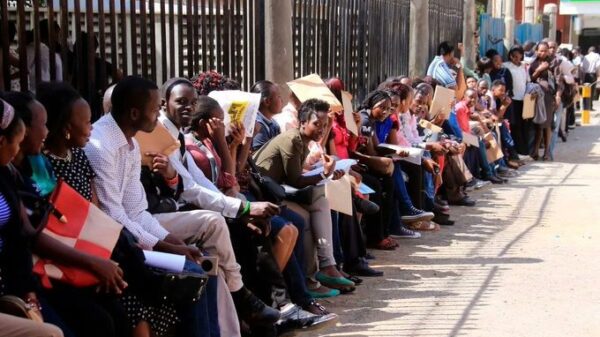
Across Africa, millions of young people are searching for employment, quality education, affordable healthcare and opportunities to build productive lives. Families are working hard to overcome economic hardship, while communities need reliable infrastructure, better public services and greater economic opportunities.
These are challenges that demand cooperation, responsible leadership and the effective use of our human and material resources.
Religious hostility does not build hospitals. Discrimination does not create jobs. Intolerance does not improve schools, strengthen public institutions or provide young people with the skills they need to compete in a changing world.
Africa’s development requires the participation of people from every religious and cultural background. Doctors, teachers, engineers, farmers, scientists, entrepreneurs, public servants and other professionals contribute to society through their knowledge, skills and dedication, not simply through their religious identities.
Imagine the opportunities Africa could unlock if people concentrated more on solving shared problems than on finding reasons to distrust one another.
Imagine communities in which Christians, Muslims, followers of African traditional religions and people of other beliefs could work together on public health, education, environmental protection, entrepreneurship and youth development without suspicion or prejudice.
Such cooperation does not require anyone to abandon their faith. It requires a willingness to recognize that the welfare of our communities is a shared responsibility.
RELIGIOUS FREEDOM AND AFRICAN CULTURAL DIGNITY
Africa’s future must be built on the confidence to understand our history, respect our cultural heritage and make independent choices about our collective destiny.
Our spiritual and cultural traditions deserve serious study and respectful treatment. African history should be taught in ways that recognize the continent’s diversity, intellectual contributions and long-standing cultural institutions.
At the same time, the right to religious freedom must protect Africans who freely choose Christianity, Islam or any other faith. No individual should be pressured to abandon a sincerely held belief simply because others interpret history differently.
The answer to historical coercion cannot be a new form of coercion. The answer to religious discrimination cannot be discrimination against another religious community.
Africa must reject the idea that respect for one tradition requires hostility towards another.
We can question historical injustices without hating contemporary believers. We can celebrate African heritage without denying the freedom of Africans whose spiritual identities differ from our own. We can discuss religion critically while respecting the dignity of every person.
This is the foundation of a mature, confident and inclusive African society.
A CALL FOR ACTION ACROSS THE CONTINENT
The appeal to African governments is practical as well as moral.
First, governments should protect freedom of religion and belief and ensure that constitutional guarantees are respected in practice.
Second, public institutions should apply fair and transparent standards in employment, education, healthcare and access to public services, preventing unlawful religious discrimination.
Third, educational institutions should promote knowledge of Africa’s diverse religious and cultural histories, helping young people develop the ability to disagree peacefully and think critically.
Fourth, governments and religious institutions should support interfaith dialogue and community initiatives that bring people together to address common social and economic challenges.
Fifth, political leaders should avoid exploiting religious divisions for political advantage and should condemn incitement, intimidation and violence directed at people because of their beliefs.
Finally, African citizens must recognize their own responsibility to build communities in which differences are handled through dialogue, respect and the rule of law rather than hatred and exclusion.
These measures would help create societies in which religious freedom and equal citizenship reinforce one another.
AFRICA MUST CHOOSE UNITY WITHOUT DEMANDING UNIFORMITY
The future of Africa cannot be built by demanding that every citizen share the same religious beliefs. Nor can lasting unity be achieved by silencing legitimate differences or ignoring historical injustices.
True unity means creating a society in which people can disagree about religion while agreeing on the importance of justice, dignity, peace, opportunity and the common good.
Our shared humanity must remain greater than the differences that distinguish us.
A Christian and a Muslim can work together to improve a school. A follower of an African traditional religion and a Christian can cooperate to protect their community’s environment. People of different beliefs can build businesses, support vulnerable families, care for the sick and contribute to national development.
These are not contradictions. They are examples of what becomes possible when human dignity takes precedence over prejudice.
African leaders have an opportunity to set the tone for this future by ensuring that every citizen, regardless of religious identity, can participate fully in national life.
The responsibility also belongs to every family, community, religious institution and individual who believes that Africa deserves a peaceful and prosperous future.
CONCLUSION: WAKE UP, AFRICA!
Africa does not need religious hostility to define its identity. It needs leaders who unite rather than divide, institutions that protect rather than discriminate, and citizens who recognize that their neighbor’s different beliefs do not diminish their own humanity.
Our continent has endured slavery, colonial domination, political conflict and many other historical challenges. The task before us is to build societies in which the dignity and rights of every person are respected, and where our differences do not become obstacles to progress.
To Africa’s Presidents, Heads of State and Heads of Government: let religious freedom, equality before the law, cultural dignity and peaceful coexistence remain central to the pursuit of national and continental development.
To religious leaders: use the influence of your institutions to encourage compassion, understanding and cooperation across communities.
To the people of Africa: let us refuse to make enemies of those who pray differently from us. Let us judge people by their conduct, respect their rights and work together to improve the conditions of life across our continent.
We may follow different spiritual paths, speak different languages and belong to different cultural communities, but we share a continent and a common interest in its future.
Africa does not need us fighting over religion. Africa needs unity, cooperation, mutual respect, justice and a collective commitment to the common good.
WAKE UP, AFRICA! Let us stop allowing differences in faith to divide us. Let us build a continent where freedom of belief is protected, human dignity is respected and every African has the opportunity to contribute to our shared future. Our strength lies not in believing alike, but in standing together despite our differences.